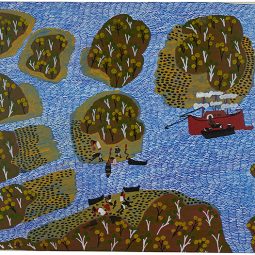
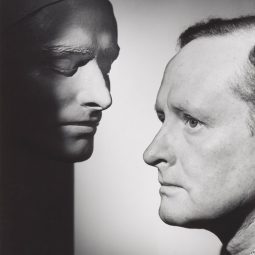
‘Who’s Afraid of Colour?’ presents over 200 contemporary artworks – from traditional woven objects and bark paintings to contemporary acrylic canvases and modern photographic and digital pieces by 118 artists in an unprecedented survey of Indigenous Australian women’s art from the National Gallery of Victoria (NGV) collection.
Exhibition highlights include; Claudia Moodoonuthi’s six skateboards painted with vibrant designs expressing her connection to Country; the three by eight metre black and white painting, Anwerlarr anganenty (Big yam Dreaming) (1995), by Emily Kam Kngwarray; and Jenny Crompton’s Sea Country Spirits (2016), an ethereal installation of thirty-two woven spirits suspended overhead; and We all need forgiveness (2014), a floor-to-ceiling, 30-screen video installation by Bindi Cole Chocka, a bold statement featuring a wall of thirty faces repeating the words ‘I forgive you’.
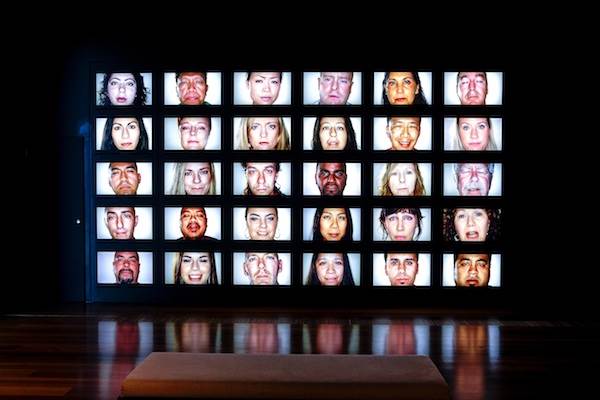
Bindi Cole, We All Need Forgiveness (video still), 2014, HD video; Installation view of ‘Who’s Afraid of Colour?’ at The Ian Potter Centre: NGV Australia. Photograph: Wayne Taylor. Courtesy the National Gallery of Victoria, Melbourne
Challenging the traditional paradigm and perspective of Indigenous art as a male dominated, dot marking technique, these women artists represent a shared voice, asserting the culture and politics of their identity – one that is rich in colour. Judith Ryan, NGV Senior Curator of Indigenous Art, discusses the exhibition and its women artists whose practices are unbounded by convention.
From the late 1980s onwards, women throughout Indigenous Australia emerged as artists of invention and flair, culminating in their international acknowledgement in 1997 when Emily Kam Kngwarray, Yvonne Koolmatrie and Judy Watson represented Australia at the Venice Biennale.
Was that an incentive to the birth of this exhibition?
Yes, the work of Indigenous women is now at the forefront. The power and diversity of Indigenous women’s work across media and their daring defiance of convention inspired me to curate this exhibition. I wanted to show their work as great art made by artists who just happen to be women.
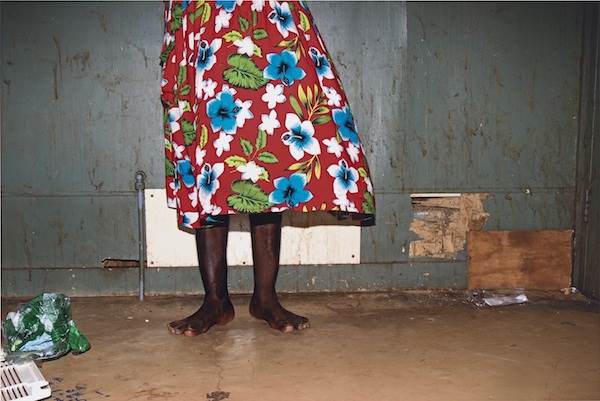
Miriam Charlie (Garrwa/Yanyuwa, born 1965), My Country No Home: Nancy Kidd, Garrwa One Camp, 2015, C-type print, 60 x 100cm © Miriam Charlie. Courtesy the National Gallery of Victoria, Melbourne
How have these women changed the face of Australian art? What is the role for Australia’s cultural institutions to implement new ways of supporting these artists and their communities?
Indigenous women have attacked new mediums and transformed customary art forms with imagination and adventure. They work on a large scale to fracture preconceptions of what Indigenous art should look like and mean. Most of the artists in this exhibition have been supported by Aboriginal owned art centres, private galleries, art fairs, art awards, triennials and biennales which enable their work to be seen by the public.
The exhibition challenges notions about how Indigenous art should be created and interpreted, with works ranging from all artistic disciplines. What was your approach with tackling common preconceptions about Indigenous art?
In facing preconceptions about Indigenous art, I endeavoured to win over the viewer through the idea that the power of art is the power of startling surprise. By displaying art of consequence, aesthetic and cultural power that is unique to this continent in pockets of depth and constant diversity, I hoped to lead viewers to a deeper understanding of why Indigenous art matters.
Can you discuss the symbolism behind the title ‘Who’s Afraid of Colour?’
The exhibition title references Barnett Newman’s quote, “Who’s afraid of red, yellow and blue?” I modified it to “Who’s afraid of colour?” to allude to the Government’s treatment of people of cultural difference and the strong political thrust of the artists’ work. Also the artists in this exhibition are boldly unafraid of trying something new and experimenting with vibrant colour.
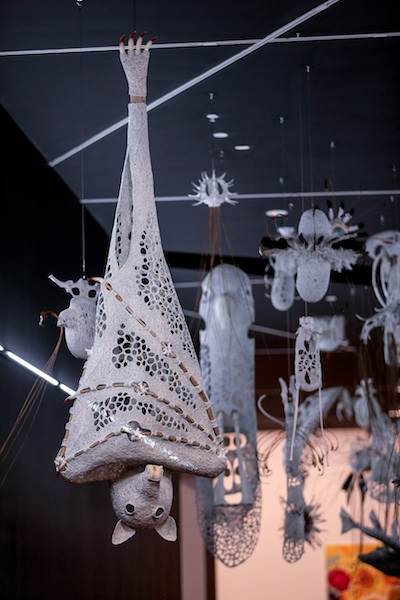
Jenny Crompton, Sea Country Spirits, 2015-2016; Installation view of ‘Who’s Afraid of Colour?’ at The Ian Potter Centre: NGV Australia. Photograph: Wayne Taylor. Courtesy the National Gallery of Victoria, Melbourne
Over 200 works extend across the walls of six gallery spaces, in rooms with seven-metre ceilings, attesting to the enormity of the display. Curating the exhibition must have been a challenge; was your curatorial and selection process challenging?
I looked at the period 1990 to now and the NGV Indigenous collection and selected the artists who have made and are making names for themselves; the revolutionary movers and shakers whose work deserves special acknowledgement. I selected artists whose work is represented in depth in the NGV collection so that viewers could see contrasts across medium, culture, iconography and scale and learn more about each of their practices. I wanted to bring out new acquisitions and reveal works that had long been in storage.
The Ian Potter Centre: NGV Australia
Until 17 April, 2017
Melbourne