‘Plain Speak’ is the first in a series of annual exhibitions at the Art Gallery of Western Australia paired with the Perth International Art Festival that focus on Aboriginal and Torres Strait Islander stories – big and small. Curator Carly Lane will bring together around 50 personal works of art from Vernon Ah Kee, Tony Albert, Michael Cook, Brenda L. Croft, Sandra Hill, Lesley Murray and Christopher Pease, charting video, paintings, photography, sculpture and textiles. We spoke to Lane ahead of the installation.
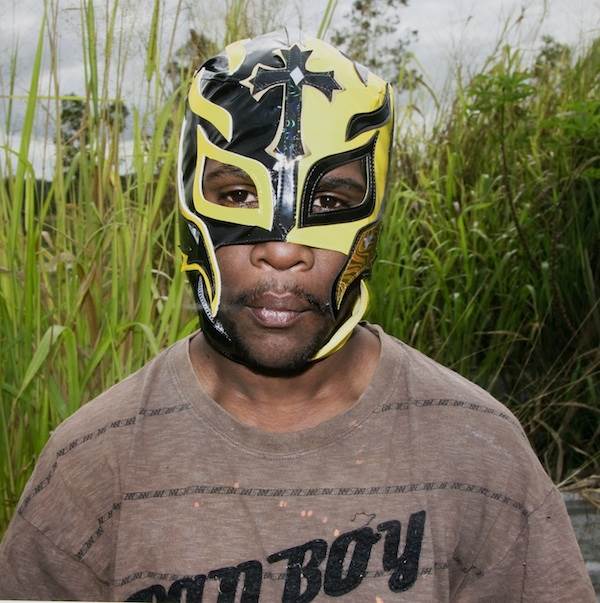
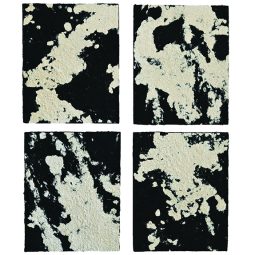
Tony Albert, No place warrior, 2009, watercolour on arches paper, 76 x 57cm. State Art Collection, Art Gallery of Western Australia Purchased through the TomorrowFund, Art Gallery of Western Australia Foundation, 2010
What is the value of ‘plain speak’?
Plain speaking is all about honesty in experience and being exposed and vulnerable as well as strong and telling your story. So that façade between public and private life becomes even more translucent. It’s really about the combinations of conversations that are drawn out in the show. For example you’ve got Michael Cook who has a series titled Mother (2016), which he produced talking about adoption and absence of the child-mother relationship. I think that’s really interesting and I don’t know that people would expect those kinds of stories to be made by Aboriginal artists, and here we are with Michael talking about a common experience for many of us.
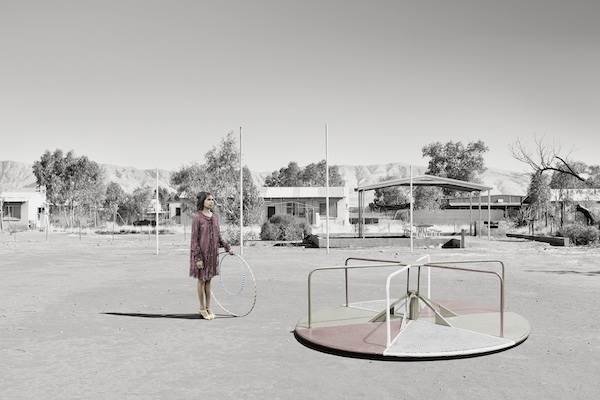
Michael Cook, Mother (Merry-go-round), 2016, inkjet print on paper, 80 × 120cm. State Art Collection, Art Gallery of Western Australia Purchased 2016
Honesty is an act of love, so it’s a positive premise where you’re acknowledging the light and
shade to everything.
Yes many artists share stories of their love of places and love of people. For example Lesley Murray is telling her Grandfather’s story across four works. Brenda L. Croft’s piece is a feature work of the show, and it’s about an exploration of self and healing after the death of family members in quick succession. So I think there’s this real exploration that goes on and an outpouring of love into the bodies of work. There’s also Bella Kelly. She’s a Noongar artist from the 1950s, 60s and 70s and she has a love of country, and her work is just beautiful. It’s definitely not an angry show.
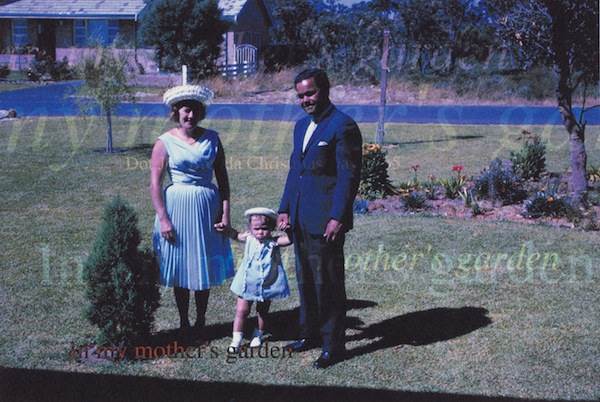
Brenda L Croft, In My Mother’s Garden (series 48 photographs), 1998, ink jet print on archival paper, 29.5 x 42cm (each). State Art Collection, Art Gallery of Western Australia Purchased partially through the Mapplethorpe Photography Trust Fund, 1999
Do you see the exhibition as a political act in this time when voices aren’t always heard?
Well, it’s always important to ensure that Aboriginal and Torres Strait islander voices are heard because I don’t think they’re heard enough in society and we certainly have a history of that. But also it is to remove the ‘cloak of invisibility’, and stereotyping that tends to go on. That’s always a major narrative or manifesto of my practice; to show Aboriginal and Torres Strait Islander people for who we are and the commonality of our experience, not just within our own communities but with broader Australian society. The show really is about ‘connecting’.
Is there a particular work or story you related with most?
It’s difficult to answer as there is something that resonates with each work of art, they are all strong and tell a story to me. It’s like having a personal conversation with someone, with each of those works. I’m particularly interested in the issue of Aboriginal deaths in custody because it is still not resolved in Australian society. Vernon Ah Kee and his Tall Man (2010) series, really highlight that and draw it to public attention. His works are so strong because they are so real, and it makes me want to cry. Certainly in Western Australia we have an issue with Aboriginal deaths in custody, just like every other state but more attention needs to be drawn toward it so that we can reduce it. We have to remember this has been going on for over years and that it’s been roughly three decades since The Royal Commission and yet we still have so many people dying. I don’t want to give the impression that it’s doom and gloom, but there is an element of trauma in the show because it reflects life experiences.
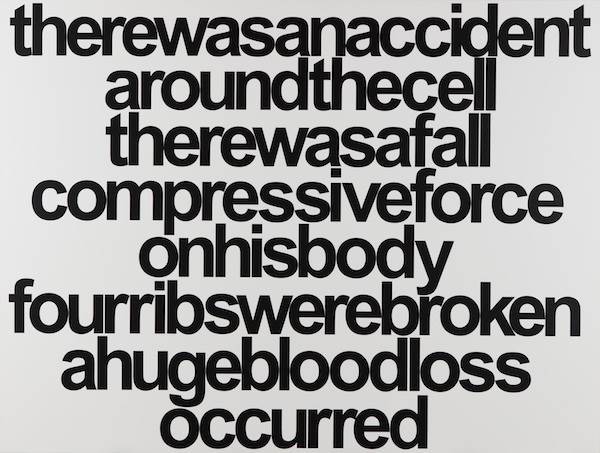
Vernon Ah Kee, Therewasafall, 2015, synthetic polymer paint on Belgian linen, 180 x 240cm. State Art Collection, Art Gallery of Western Australia Purchased 2016
Art is a fantastic vehicle for ideas that are difficult; it takes you to a deeper engagement.
Absolutely, I say it all the time that art is a great platform for communication. Even though sometimes the subjects may be confrontational for individuals, the individuals are far more likely to interact with art about these issues.
Will there be public programming to inspire the next generation?
The show will be up until the middle of August so it will be open for NAIDOC week 2 to 9 July, 2017, and we’ll have another show on at that time of Aboriginal objects. In terms of inspiring the next generation I think that’s a really large task! But hopefully it contributes to that.
Art Gallery of Western Australia
25 February to 13 August, 2017
Western Australia