“. . . to impress and dazzle . . .”
Ngura Puḻka – Epic Country is a spectacular exhibition of thirty huge paintings by forty-nine First Nations artists of the Aṉangu Pitjantjatjara Yankunytjatjara (APY) Lands. Their subject is the desert country and tjukurpa – ancestral stories/Dreamings – of the Aṉangu in South Australia’s north-west.
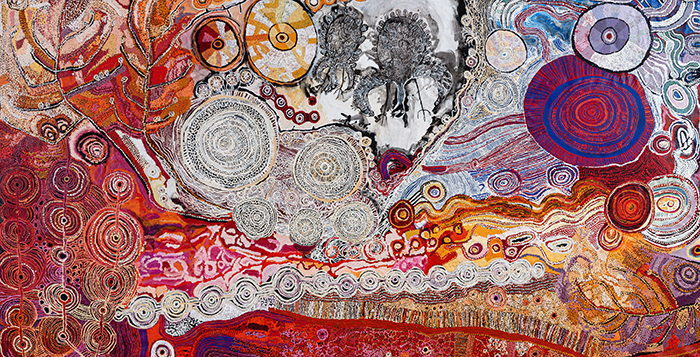
APY Women’s Regional Collaborative, Ngura Puḻka – Epic Country, 2022 / © the artists, APY Art Centre Collective / Courtesy APY Art Centre Collective
Scale is one of the distinguishing features of the works in this show, with most of the paintings three-by-three metres and the largest, three-by-five metres. There is also a huge diversity in styles and approaches in the paintings in the exhibition, from the explosive energy of Nyunmiti Burton’s Seven Sisters Tjukurpa, 2021, the gestural freedom of Barbara Moore’s Ngayuku Ngura (My Country), 2021, and the subtle magic of Matjangka Nyukana Norris’ Ngura Pilti, 2021. The exhibition brings together a rollcall of some of the great names in APY art, including Betty Chimney, Betty Kuntiwa Pumani, Margaret Richards, Zaachariaha Fielding, Betty Muffler, Kunmanara (Nellie Ngampa) Coulthard, and many others.
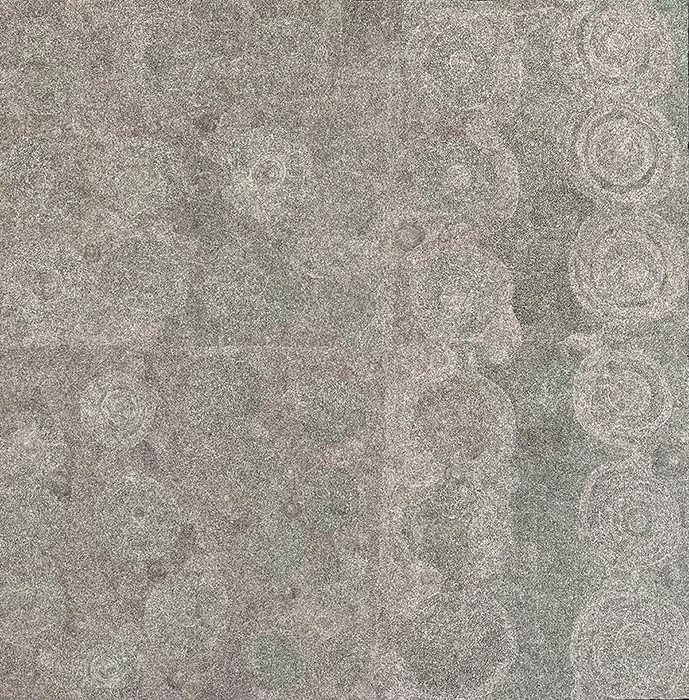
Matjangka Nyukana Norris, Pitjantjatjara people, Ngura Pilti, 2021 / © the artist, Kaltjiti Arts, APY Art Centre Collective / Courtesy APY Art Centre Collective
The National Gallery of Australia’s dramatic display is accompanied by a selection of thirteen works by APY artists drawn from the national collection and shown in a neighbouring gallery. If the aim was to impress and dazzle a broad audience with a large and stunning exhibition of First Nations art, then Ngura Puḻka – Epic Country is an outstanding success. In the words of the gallery’s head curator, First Nations art, Tina Baum (Gulumirrgin (Larrakia)/Wardaman/Karajarri peoples), it is a show of “Epic stories, epic scale, epic Country.”
However, this exhibition has had a particularly long and controversial incubation period. Three years ago, when it was largely installed at the gallery and ready to open, the Murdoch press ran a sensationalist story that it had evidence that at least some of the work was assisted by some non-Indigenous studio assistants. This caused sufficient controversy for the show to be pulled and after three enquiries cleared the artists and the artists’ led and owned APY Art Centre Collective of any wrongdoing, the exhibition has been finally reinstalled and opened to the public.
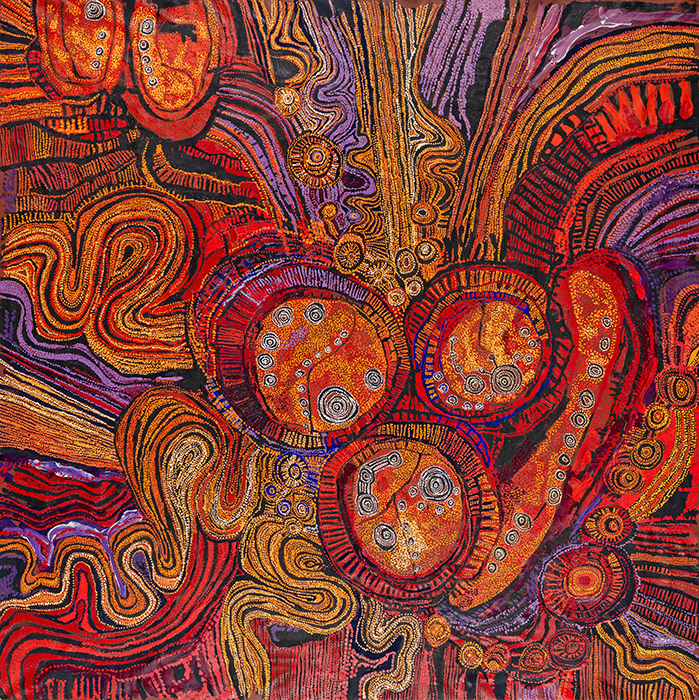
Nyunmiti Burton, Pitjantjatjara people, Seven Sisters Tjukurpa, 2021 / Photograph: Andy Francis / © the artist, APY Art Centre Collective / Courtesy APY Art Centre Collective
I find that there is something somewhat colonial in the mindset of some elderly non-Indigenous art commentators who feel that they have the right to dictate what constitutes ‘authentic’ Aboriginal art and the way that it should be made. I am inclined to believe that we should respect First Nations artists as artists and custodians of their cultural traditions and if they are happy with the outcome of the work then it is not for us to judge. If they chose to employ studio assistants in the execution of their work, as do very many non-Indigenous artists, it is their choice. Having spoken to a number of the participating artists, all of them, to the woman, were happy with the outcome and proud of their achievement, even if a couple grumbled that they had to wait an additional three years for the show to happen.
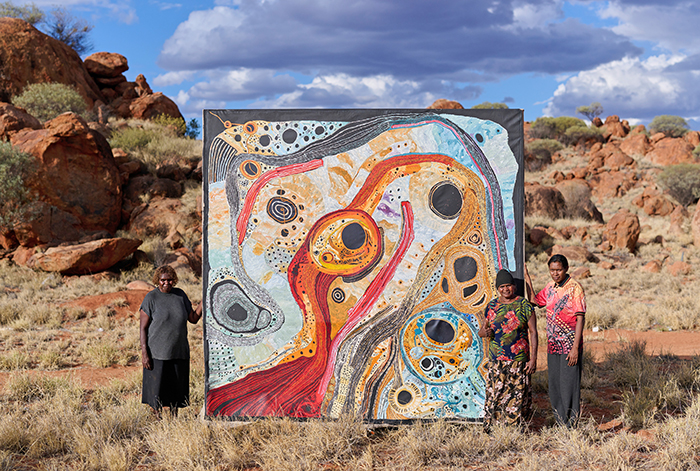
Pauline Minmila Wangin, Pitjantjatjara people, Betty Tjulpukuna Campbell, Pitjantjatjara people, and Emma Singer, Pitjantjatjara people, in Mimili, South Australia, 2022 with their work Kapi (Water), 2022 / Photograph: Rohan Thomson / © the artists, Mimili Maku Arts, APY Art Centre Collective / Courtesy Mimili Maku Arts and APY Art Centre Collective
Ultimately, if some people don’t like the work, no one forces them to go to the exhibition or to buy the paintings for their walls or for their institutions. Now that Ngura Puḻka is open to the public, the crowds are voting with their feet to make this into a particularly well-attended and much-admired exhibition. To the twenty-four paintings from the original 2023 exhibition, six have been subsequently added.
Despite the controversy, Ngura Puḻka – Epic Country is a major coup for the National Gallery of Australia.
Emeritus Professor Sasha Grishin AM, FAHA works nationally and internationally as an art historian, art critic, and curator.
National Gallery of Australia
11 April to 23 August 2026
Australian Capital Territory
Originally published in print – Art Almanac, July 2026 issue, pp. 27–30