Colour, movement, and geometries play out in alternative methodologies at the two Australian Galleries spaces this July.
In Sydney and Melbourne, Wayne Eager and Ayako Saito use abstraction, rendered in a multitude of hues and form – from the expressive, resolved paintings by Eager to the hard-edge steel, brass, and paper sculptures of Saito’s oeuvre.
Wayne Eager
Field Notes
Based in the Yarra Valley, Wayne Eager’s paintings conjure movement and structure through deep, defined, geometric lines, immersed in colour. They are inspired by life, the landscape, and living in the Australian country.
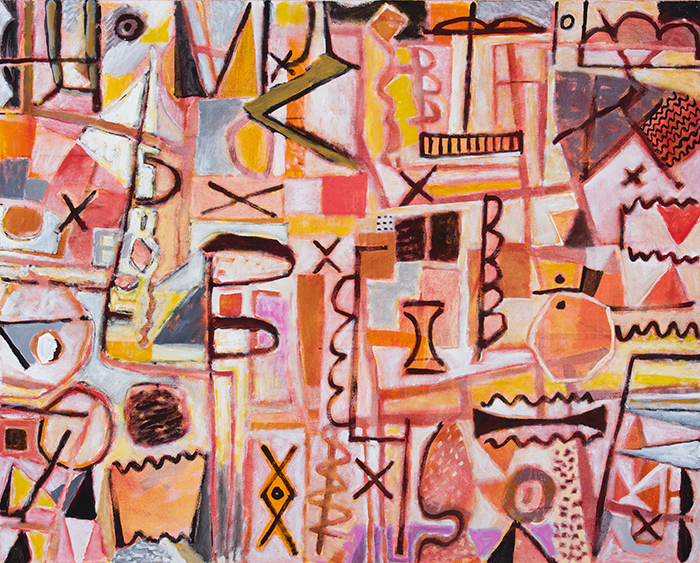
Wayne Eager, Objective (detail), 2026, acrylic on linen, 122 × 153cm / Courtesy the artist and Australian Galleries, Melbourne & Sydney
Titled Field Notes, the paintings are the continuation of long stories, meandering from painting to painting. In some examples, the works may have begun their life in the remote Central Australian Desert, where he spent thirty years with his wife, Marina Strocchi, who is shown simultaneously at Australian Galleries, Sydney. It was here that the light and expressive form seeped into his practice.
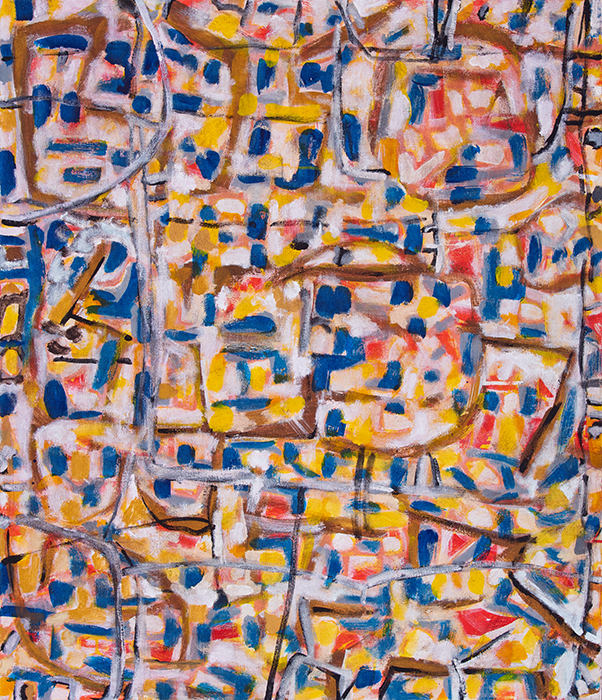
Wayne Eager, Rocks in the Hills, Northside (state II), 2026, acrylic on linen, 107 × 92cm / Courtesy the artist and Australian Galleries, Melbourne & Sydney
With a fifty-year-long art practice, Eager muses on his works, the result of ‘bits and pieces’ woven together until they feel resolved. A process he describes as a “long and winding road,” using either oil or acrylic paints, built up in layers and layers. In the painting Objective, 2026, the composition is split into a maze of black lines and sunset colours – each section seems to depict a part of a story, with symbols and geometric hues. Purples, pinks, oranges, yellows dominate the surface, with hints of blue and green. The narrative beckons the viewer to explore, like a map, to delve into a journey.
Eager’s oeuvre is not prescriptive but inspires to see life and landscape through a range of tonalities. To question what can be seen and look even harder. Taking field notes along the way.
7 to 25 July 2026
Sydney
Ayako Saito
The Sum of my Parts
Defined by bold colours and clean lines, Ayako Saito’s sculptural practice spans steel, bronze, and paper. Her upcoming exhibition, The Sum of my Parts, brings together her various mediums and styles with old and new works.
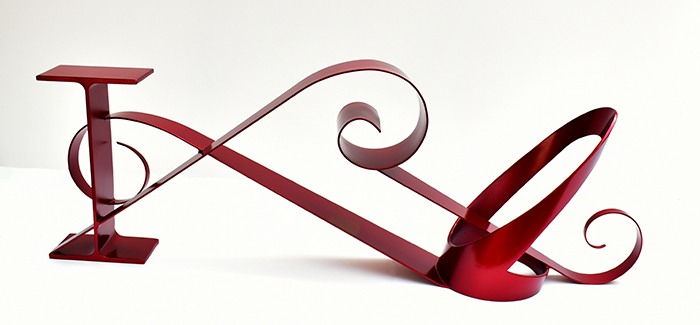
Ayako Saito, Velvet Mezzo, 2026, steel, painted, 33.5 × 94 × 16.5cm / Photograph: Ayako Saito / Courtesy the artist and Australian Galleries, Melbourne & Sydney
Well known for her large Sculpture by the Sea monolithic and inherently robust objects, the exhibition instead turns to Saito’s experimental practice that allows her medium to bend and shift into her expressive shapes. The works become experimental, and in a sense allow for a testing of her larger works, which recently saw her awarded the 2025 ‘Mid-Career’ Helen Lempriere Scholarship from Sculpture by the Sea, present a monumental work at the University of Sydney, and install a large sculpture in High Court Sydney’s courtyard.
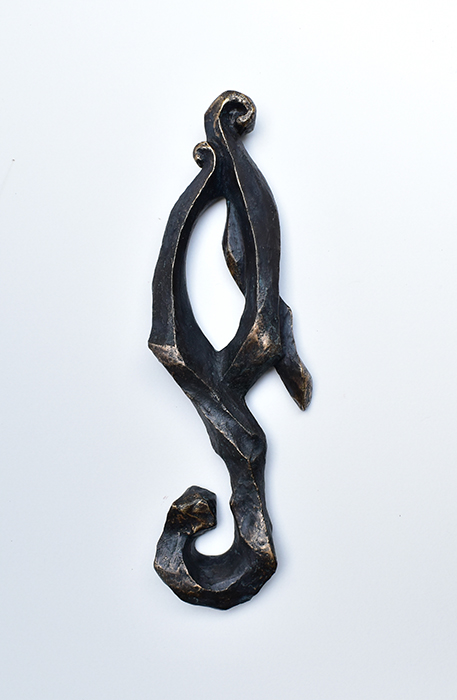
Ayako Saito, Alice, 2026, Bronze (ed.7), 38 × 13 × 4cm / Photograph: Ayako Saito / Courtesy the artist and Australian Galleries, Melbourne & Sydney
Saito shares that the form comes first; the twisting, curving, angular motif is seen throughout her steel, bronze, and paper sculptures. Each resolved, original, and complete. Ever inspired by the artist’s fascination by the physicality and the memory of space. The material defines how they are interpreted. Each medium brings its own quality to the forefront, and even the colours are an extension of this philosophy. “The colour has to match the character of the form,” she says.
Appearing ever moving and in a state of flux, Saito’s works for The Sum of my Parts display a holistically immersive practice, a cycle of inspiration.
21 July to 8 August 2026
Melbourne
Emma-Kate Wilson is an art critic and design writer based on Bundjalung Country in northern New South Wales.
Australian Galleries
Melbourne & Sydney
Originally published in print – Art Almanac, July 2026 issue, pp. 23–26