“. . . how permanent collections remain alive . . .”
Iconic Loved Unexpected marks a defining moment in the history of Newcastle Art Gallery. Following a four-year closure and a $48 million redevelopment, one of Australia’s most significant regional collections has reemerged in a transformed building that fundamentally rethinks how a public collection is experienced. Rather than simply revealing more works, the exhibition asks what makes a collection iconic, why certain works become loved, and how unexpected juxtapositions can continually reshape the way audiences see them.
“It now enables us for the very first time to have our collection out on permanent display,” says Director Lauretta Morton.
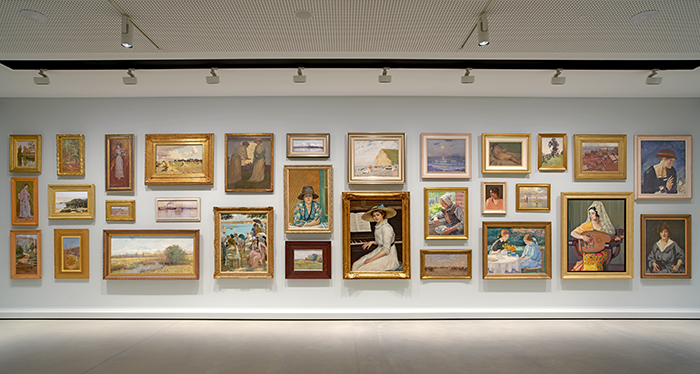
Installation view, Iconic Loved Unexpected, Newcastle Art Gallery, Australia, 2025, featuring (top row, left to right) Julian Ashton, Untitled, 1889; John Ford Paterson, Landscape with tree fern, 1892; Arthur Streeton, Belinda (Lady of the period),1894; Arthur Streeton, Australian December, the first crop, 1886–7, Rupert Bunny, The artist’s wife and maid, c. 1900; Albert Henry Fullwood, Susan Island, 1894; George Bell, The beach, Corfe, 1912, Charles Bryant, Reflections, coast of Cornwall, c.1912, E. Phillips Fox, Nude, c.1910; Elioth Gruner, Spring morning, 1917; George W. Lambert, Newcastle station and Harbour, 1925; George W. Lambert, Portrait (Red trimmed hat), c.1921; (middle row, left to right) attributed to Julian Ashton, Woman in a kimono, 1895; W. C. Piguenit, A conversazione, c.1896; Sophie Steffanoni, The incoming tide, Sydney Harbour, 1898; Edith Cusack, Evening, Darling Harbour, 1896; Rupert Bunny, Sunshine c.1910; Hilda Rix Nicholas, French peasant woman c.1912, attributed to Julian Ashton, Portrait, 1913; Charles Bryant, Sketch for summer sea, 1931; (bottom row, left to right) W. Lister Lister, Bush scene, c.1900; Sydney Long, In the spring, c.1895; Jane Sutherland, Heidelberg landscape, c.1892; Rupert Bunny, Last fine days, Royan, c.1908; W. Lister Lister, Sunshine c.1910; Rupert Bunny, Portrait of the artist’s niece, 1912, George W. Lambert, Cavalry approaching an Arab village, 1920; Hilda Rix Nicholas, Grace, c.1914; Hilda Rix Nicholas, The Spanish shawl, c.1936; James Quinn, Portrait of the artist’s wife, 1926 / ‘Australian Modernism,’ Location: Valerie and John Ryan Gallery (Gallery 4) / Newcastle Art Gallery Collection / Photograph: Matt Carbone
Yet Iconic Loved Unexpected is about far more than displaying additional works. The exhibition reflects on the evolving role of a public collection and the ways its meaning continues to shift over time. Its title articulates the curatorial premise: iconic works that define the gallery’s identity, loved works that generations of Novocastrians return to, and unexpected encounters that invite familiar works to be seen anew.
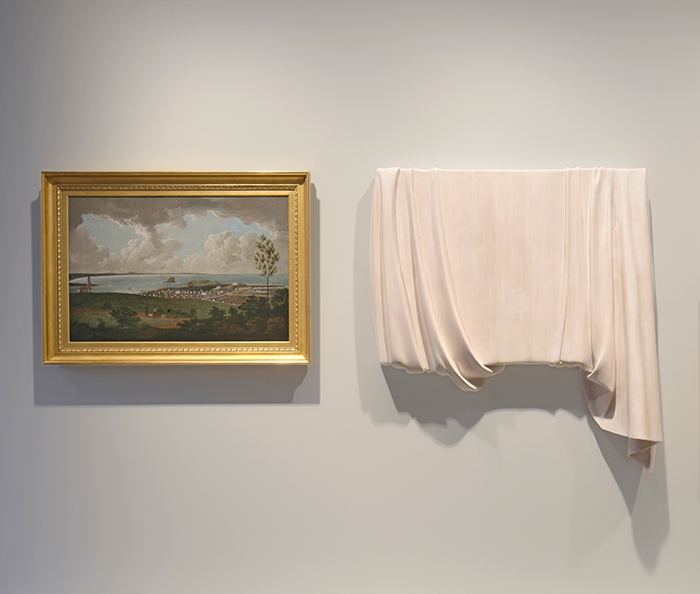
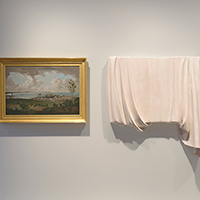
Installation view, Iconic Loved Unexpected, Newcastle Art Gallery, Australia, 2025, featuring Joseph Lycett, Inner view of Newcastle, c.1818; Abdul Rahman-Abdullah, The men who sold lies, 2018 / Photograph: Edwina Richards / © the artist
That philosophy is evident from the moment visitors enter. Guided by the principle of “First Nations first and women first,” the exhibition opens beneath Megan Cope’s Kinyingarra guwinyanba (Off Country), 2022, before unfolding through Australian and international art. The prominence of First Nations and women artists reflects a collection consciously addressing historical imbalance while remaining grounded in its own history.
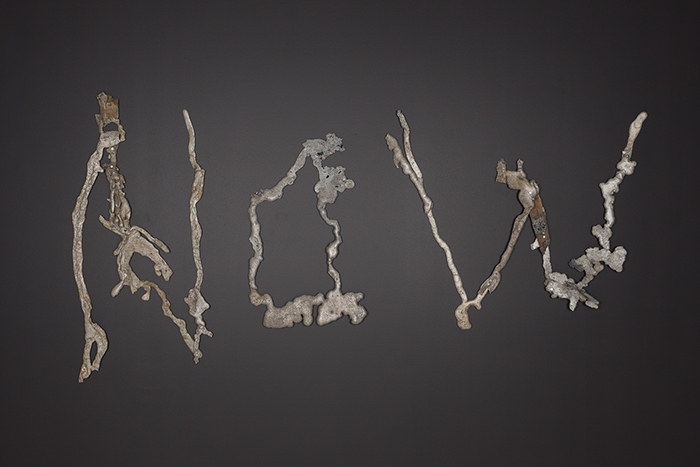
Fiona Lee, If not now, when?, 2021 / Newcastle Art Gallery, Australia, Les Renfrew Bequest 2022 / © the artist
Nowhere is the redevelopment more apparent than in the Mary and Richard Owens Gallery, where more than 130 works trace the collection’s development from Joseph Lycett’s Inner View of Newcastle, 1818 – the earliest painting in the collection and one of only four known Lycett oil paintings – to 1957 – the year Newcastle Art Gallery was established. Rather than relying on traditional wall text, interpretation is delivered through a digital audio guide accessed via QR codes. As Morton explains, “if we included wall text in this gallery, we wouldn’t have been able to fit all 130 works into the space.”
Accessibility is woven throughout the redevelopment, extending beyond physical access to encourage different ways of engaging with art. Steel sculptural installations surrounding the original staircases incorporate tactile interpretations of key works alongside geological core samples drawn from beneath the site, connecting visitors to both the collection and the place on which it stands. Nearby, a generously padded bench invites visitors to recline beneath John Olsen’s The sea sun of 5 bells, 1964, encouraging the kind of slow, attentive looking museums so often aspire to cultivate.
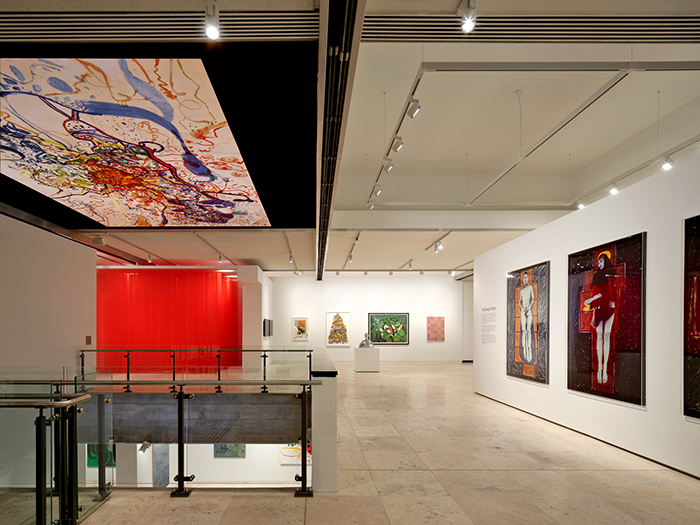
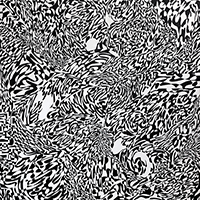
Installation view, Iconic Loved Unexpected, Newcastle Art Gallery, Australia, 2026, featuring (clockwise from above left) John Olsen, The sea sun of 5 bells, 1964; Dani Marti, Looking for Felix, 2000; Jemima Wyman, Mass monument (yellow and black), 2018; Tamara Dean, Sacred lotus (Nelumbo nucifera) in Summer, 2018; Savanhdary Vongpoothorn, Flesh, 2003; Julie Rrap, Persona and shadow: Christ, 1984; Julie Rrap, Persona and shadow: Madonna, 1984 / Photograph: Matt Carbone / © the artists
Among the exhibition’s most compelling conversations is the pairing of Joseph Lycett’s Inner View of Newcastle, 1818, with Abdul Abdullah’s The Men Who Sold Lies, 2018, originally created for the 1818 Project. Seen together, the works transform Lycett’s colonial landscape from historical record into a dialogue about colonisation, representation, and historical memory. It demonstrates how permanent collections remain alive, continually reinterpreted through the perspectives of contemporary artists.
For Morton, the reopening has also been deeply emotional. She recalls visitors returning to works they had not seen for four years. “People were crying,” she says. The response speaks not only to the significance of the collection itself, but to the enduring relationship between the gallery and its community. As Morton observes, the institution sees itself as “custodians of this collection,” a subtle but important distinction that underpins the exhibition’s philosophy.
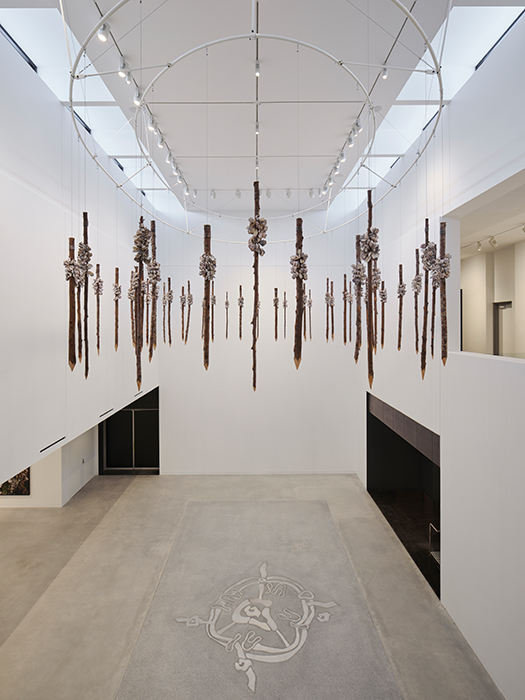
Megan Cope, Kinyingarra Guwinyanba (Off Country), 2022, installation view, Newcastle Art Gallery, 2025 / Newcastle Art Gallery, Australia, gift of Newcastle Art Gallery Foundation, 2024 / Photograph: Matt Carbone / © the artist
More than a reopening exhibition, Iconic Loved Unexpected demonstrates how a permanent collection can remain dynamic through changing interpretations, new relationships, and renewed ways of looking. By revealing more of the collection while encouraging audiences to see it differently, it marks the beginning of a new chapter for Newcastle Art Gallery and one of Australia’s most significant regional collections.
Joey Hespe is Copy Editor at Art Almanac and a former Editor of Artel, the members’ magazine of Maitland Regional Art Gallery.
Newcastle Art Gallery
Long-term display
New South Wales
Originally published in print – Art Almanac, September 2026 issue, pp. 32–37