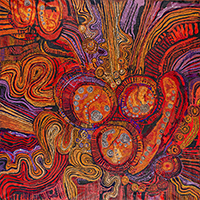
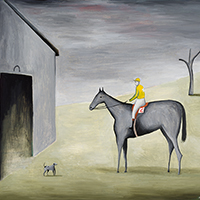
Distilling the human experience into artworks, Adelaide-based painter Rebecca Hastings and Canberra-based printmaker and painter Annika Romeyn have wildly different subject matter – yet both leave the maker’s hand imprinted on their work, imbuing it with humanity and scale.
For Hastings’s hyperreal paintings, she takes cues from the uncanny and Goya, and Romeyn looks to Antarctica for her iceberg-inspired monotype prints, watercolour, and gouache paintings.
Rebecca Hastings
Witches’ Flight
Using a classical painting approach based on Old Master techniques, Rebecca Hastings invites viewers into the uncanny in her exhibition, Witches’ Flight. Inspired by Francisco Goya’s 1798 painting of the same name, Hastings found herself drawn to the idea of opening space for the unknown, the unseen, and the psychologically charged. “Seeing this painting through a contemporary lens, I became more interested in the possibility of the irrational, the fantastical, and the unknowable,” says Hastings.
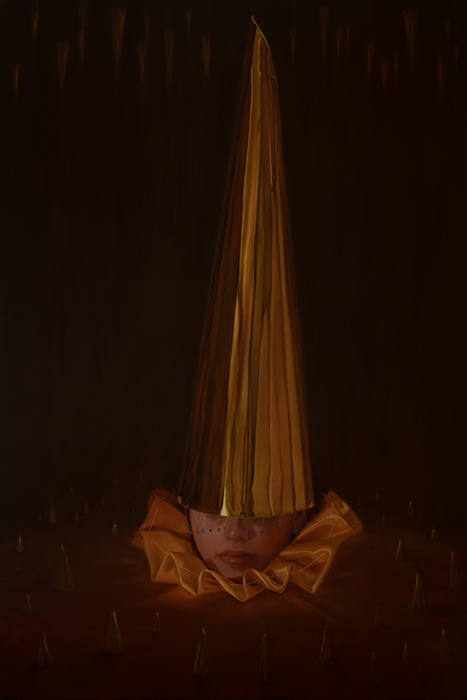
Rebecca Hastings, Hive Mind, 2026, oil on polycotton, 150 × 100cm / Photograph: Roh Smith / Courtesy the artist and Flinders Lane Gallery, Melbourne
Hastings’s paintings employ the use of ‘the unheimlich’ – something that both taps into the familiar and the transgressive through realist paintings. Tropes like disembodiment continue this effect; as she describes, “holes with eyes peering through them, disembodied hands or just floating heads.”
Likewise, she refers to mining memory as channelling the past. “I use objects and things from the past to evoke a sense of nostalgia . . . a false comfort within the work,” Hastings adds. “I’m thinking about my own past, and in particular childhood . . . vintage clothing, toys, handmade props, and décor from a 1970s childhood. These serve as nostalgic triggers – a past viewed through rose-tinted lenses.”
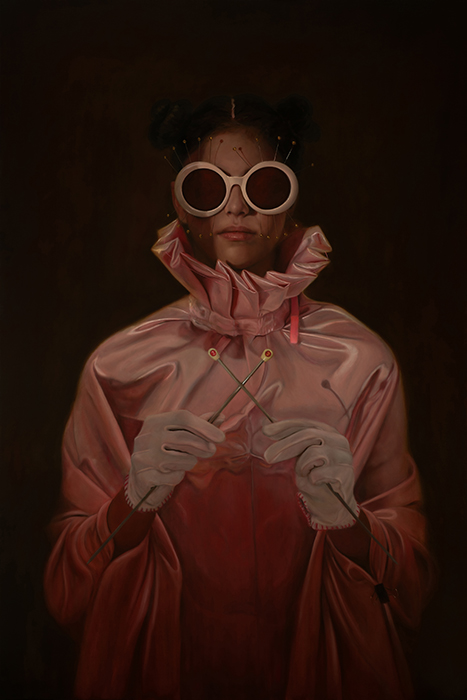
Rebecca Hastings, Touchwood (After Catweazle), 2026, oil on polycotton, 150 × 100cm / Photograph: Roh Smith / Courtesy the artist and Flinders Lane Gallery, Melbourne
In an era of AI, Hastings has leaned more into painterly, gestural marks that reveal the hand of the maker, resulting in dreamy, surreal paintings that disturb the familiar. “I wanted to reclaim an imaginative mindset, letting subconscious cues and unexpected impulses guide the process rather than being fixed on meaning or technique. Painting became a way of stepping outside the rational world . . . finding a new way of seeing that resists interpretation,” she concludes.
15 September to 10 October 2026
Annika Romeyn
Flux
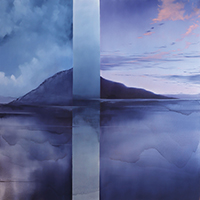
Inspired by her three-week journey to the Antarctic Peninsula and South Georgia Island, Annika Romeyn reflects on states of flux in works on paper that draw the viewer into her experience. Icebergs from the southern continent fill the composition, meeting the water’s edge in myriad hues of blue that convey the vastness of the environment, depicted in watercolour and gouache monotype prints and paintings.
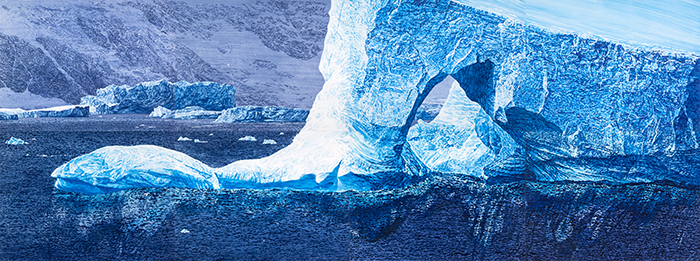
Annika Romeyn, Passing (detail), 2026, watercolour and gouache monotype on 18 sheets of paper with watercolour and gouache additions, 168 × 456cm / Courtesy the artist and Flinders Lane Gallery, Melbourne
“I was out [on deck] in all conditions, rugged up, painting . . . snow, wind-blown rain, or granular pellets of snow landed in the watercolours and left their own marks and imprints,” says Romeyn. “I had to adapt my process, giving over to the uncontrollable elements, and trying to capture the sense of the weather and fast-changing conditions.”
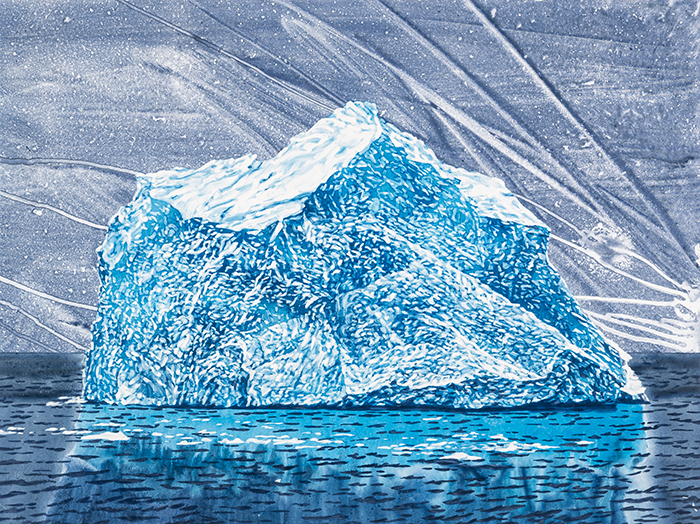
Annika Romeyn, Fractured, 2026, watercolour and gouache monotype on paper, 56 × 76cm / Courtesy the artist and Flinders Lane Gallery, Melbourne
Back in the studio, Romeyn’s process informs the exhibition’s aesthetic. A fleeting translation of monotype, where the image transfers only once. Slight finger marks on the surface invite a slowing down to absorb the subject matter, a moment in deep thought at these impressive, monolithic forms; something felt in the 168 × 456cm artwork Passing. “I like that direct touch, the mark directly from my fingertip to create a sense of intimacy within the process, and what I want people to feel about the landscape,” says Romeyn.
Romeyn shares, it’s a remote and extreme place, but it’s not otherworldly; it is our world. The weather is felt in Australia, and we witness the same animals on their seasonal migration. These artworks invite connection and, in turn, care.
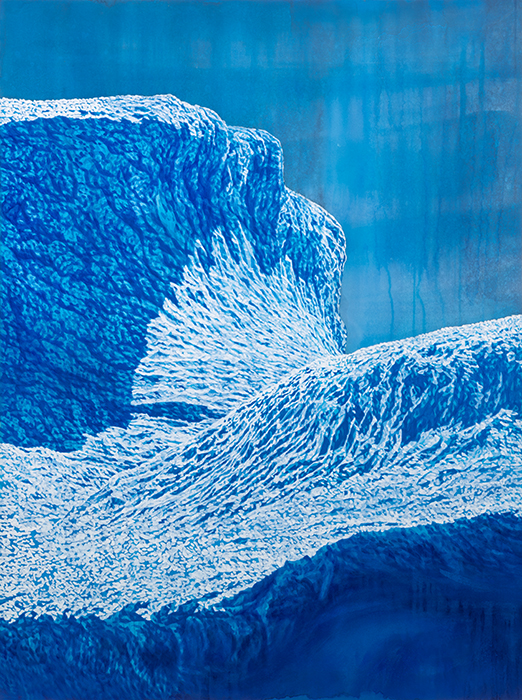
Annika Romeyn, Antarctic Light (Towards Charlotte Bay), 2026, watercolour and gouache on paper, 121 × 91cm / Courtesy the artist and Flinders Lane Gallery, Melbourne
13 to 31 October 2026
Emma-Kate Wilson is an art critic and design writer based on Bundjalung Country in northern New South Wales.
Flinders Lane Gallery
Melbourne
Originally published in print – Art Almanac, October 2026 issue, pp. 31–37