Both Renée Estée and Julien Creuzet explore emotions – from personal ones to shared ones – through a mix of media that centres the audience’s perspective within the artwork. From Estée’s bright, large paintings and drawings that muse on signs and symbols to Creuzet’s sculptural installations that explore signifiers of the African diaspora.
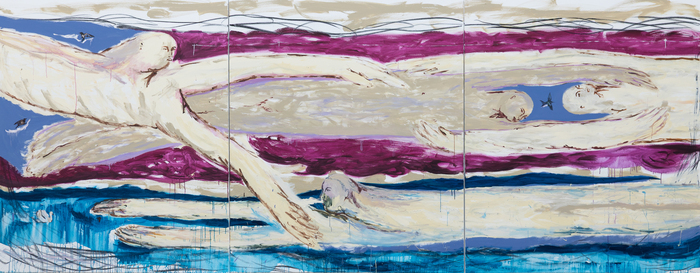
Renée Estée, Between Reach and Grasp, 2026, Flashe, watercolour, oil paint, glitter, charcoal on canvas, 203 × 517.5cm / Courtesy the artist and COMA, Sydney
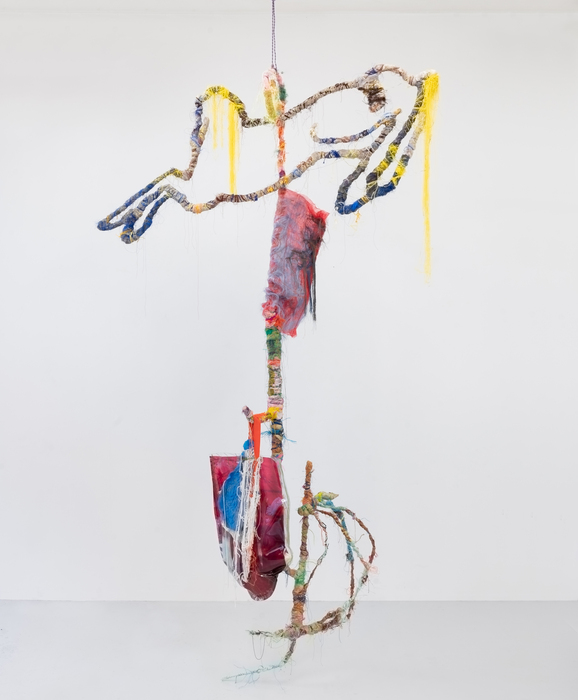
Julien Creuzet, Orpheus was musing upon braised words, Under the light rain of a blazing fog, Snakes are deaf and dumb anyway, Oblivion buried in the depths of insomnia, cheval, 2023, acrylic, steel, PCL plastic, fabric, thread, electrical wiring, and synthetic hair, 264 × 72 × 40cm / Photograph: Holly Fogg / Courtesy the artist and COMA, Sydney
Renée Estée
One for Sorrow, Two for Joy
Bringing together nine large-scale paintings, including a nearly six-metre-long triptych, One for Sorrow, Two for Joy takes its title from the traditional magpie counting rhyme. “That became a starting point for thinking about the stories we construct around coincidence, chance, and uncertainty,” says Estée. “We’re constantly looking for signs to tell us where we’re going, especially when we feel like we’ve fallen off the path a little.”
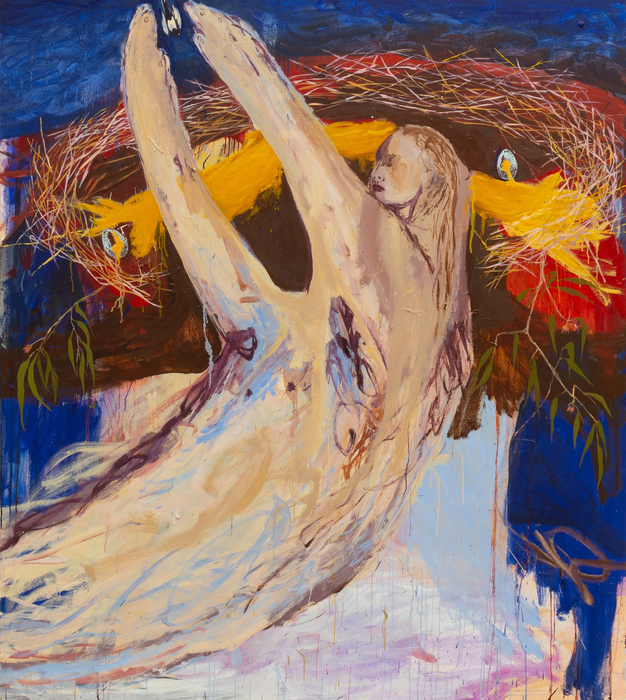
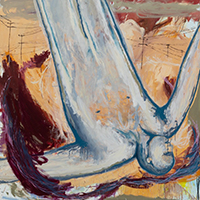
Renée Estée, Can’t keep holding onto sorrow (detail), 2026, Flashe, oil paint, charcoal on canvas, 183 × 163cm / Courtesy the artist and COMA, Sydney
The triptych is the largest painting the artist has made, something she describes as a ‘huge logistical challenge’ in her tiny Melbourne studio. But she adds, “I became interested in what happens when the body is stretched across such a large surface . . . often reaching towards something just beyond themselves.”
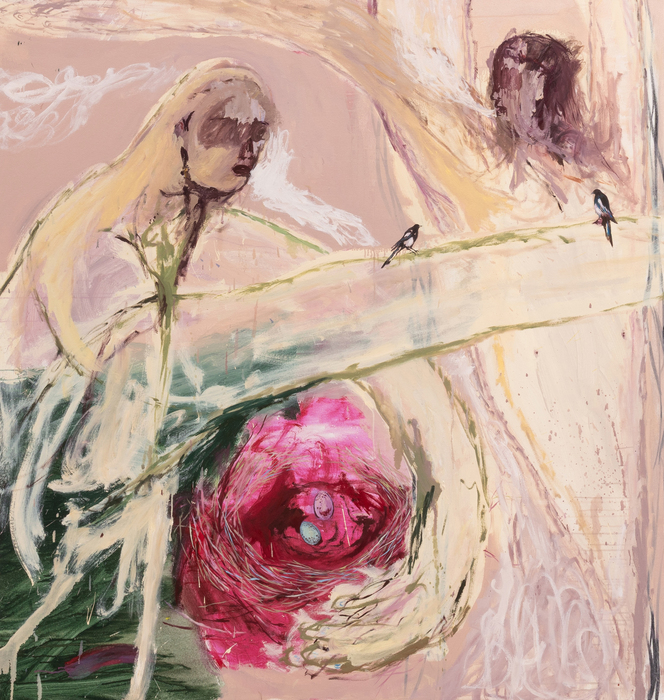
Renée Estée, I saw you searching for joy, 2026, Flashe, oil paint, charcoal on canvas, 183 × 172.5cm / Courtesy the artist and COMA, Sydney
Estée found the confidence to work on such a large painting after winning the MA Art Prize at Sydney Contemporary with Empty Nest (we all wait for someone), 2026; it was there she became interested in extending figures across large spaces as they reach for one another.
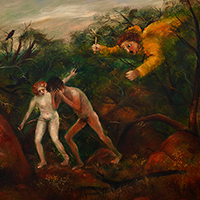
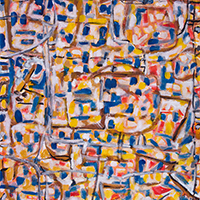
The vibrant, layered paintings feature thinned-out oil paint dripping, pooling, and staining across the surface, and the artist adds charcoal, oil bar, and, in some works, Flashe, a super-matte vinyl acrylic paint. They are artworks to be experienced from afar, and yet up close they offer a new reading. “When something feels uncertain, we instinctively start looking for patterns,” Estée explains. “A bird appears at a particular moment, you keep seeing the same number, you have a strange encounter with someone.” She represents this in tiny, quiet details in her paintings like eggs, nests, dandelions, birds, telephone lines.
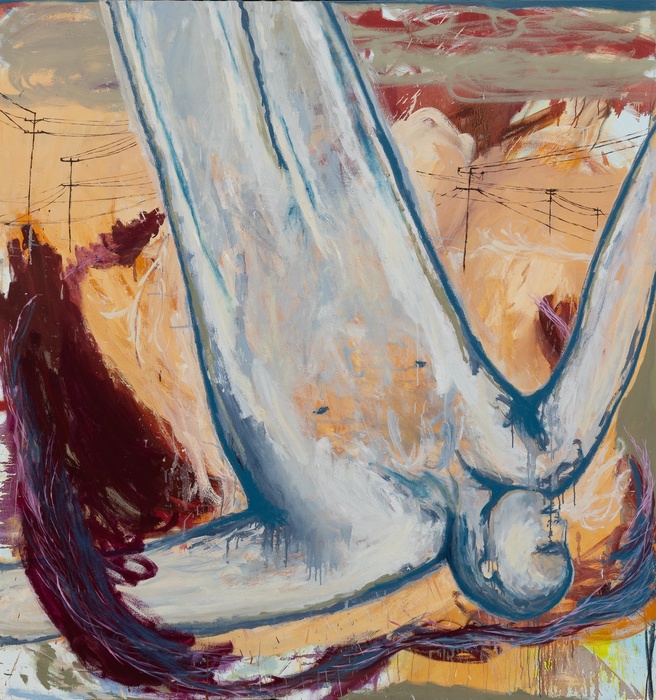
Renée Estée, It felt like I was falling through the sky, where the birds above had flown, 2026, oil paint, oil bar, charcoal on canvas, 183 × 172.5cm / Courtesy the artist and COMA, Sydney
The symbols connect to the artist’s search for guidance, and even the danger in this. To find joy in two magpies. To hope the sorrow no longer lingers.
9 October to 14 November 2026
Julien Creuzet
‘Fwiyapen or breadfruit, distant, blue as the wind caressing our skin, uru, a remote force connecting us or ulu, or mei. Our waves speak Tuvaluan; our furious strokes dance in the style of Niuafo’ou; our memories dream in Niuean, together, we count plankton in Mangarevan; we swim against opposing currents, drifting like a stretcher, dreaming of caressing the ocean floor.’
French–Caribbean artist Julien Creuzet’s first solo exhibition in Australia muses on how his experiences as a person of the African diaspora can connect to a country, a region, and a history. He uses the motif of the breadfruit tree in this exhibition. “It is a tree I have always seen around me, near my parents’ home, for instance, and one whose fruit we have always cooked and eaten,” Creuzet shares. “Knowing that this tree has a history linked to maritime movements, historical shifts, and uprisings and that it belongs to a region near Australia, allows me to mentally traverse distances.”
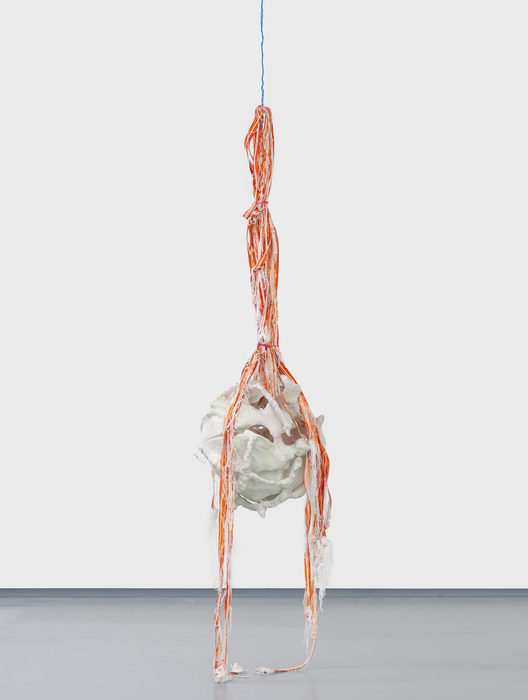
Julien Creuzet, Attila cataracte, ta source aux pieds, des pitons verts, finira dans la grande mer, gouffre bleu, nous nous noyâmes, dans les larmes marées, de la lune, coquillage, Syrinx Arianus, 2024, polyamide print, acrylic, varnish, straps, 62 × 58 × 58cm / Photograph: Pauline Assathiany / Courtesy the artist and COMA, Sydney
He adds, “it makes me feel, in a way, as though I am sailing or drifting, and enables me to establish a kind of contact or the beginnings of a dialogue with things that stir my emotions.” Likewise, the title reflects a shifting of identity for the breadfruit tree. “I try to incorporate all the names given to it across the world in Creole as well as in various other languages as a form of resonance or emanation,” says Creuzet. “From there, a shared space for reflection and poetry begins to take shape.”
The breadfruit tree takes form metaphorically, to evoke the imagination and to serve as a space for reflection, imagining, and dreaming. The musing is left to the visitor to find their own interpretive space within Creuzet’s archipelago, featuring a multitude of suspended sculptures with video, sound, and poetry.
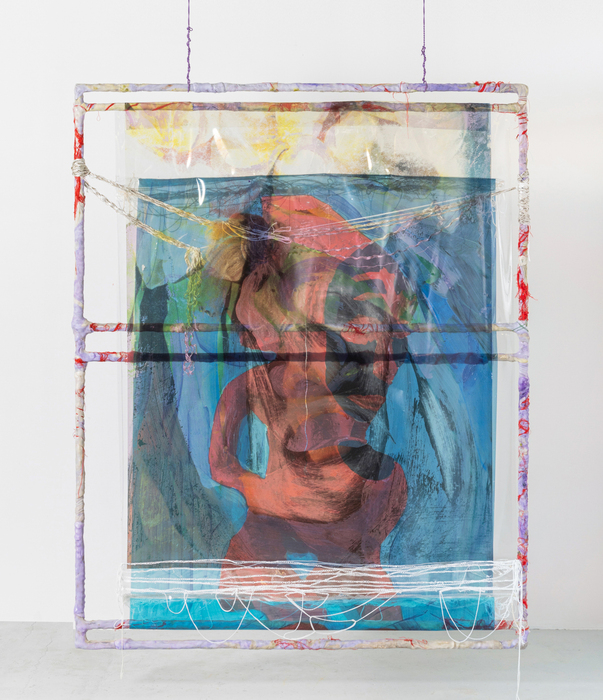
Julien Creuzet, Orpheus was musing upon braised words, Under the light rain of a blazing fog, Snakes are deaf and dumb anyway, Oblivion buried in the depths of insomnia, paravent 7, 2022, metal, pearls, prints, PCL plastic, UV print on vinyl, thread, and acrylic, 200 × 160 × 10cm / Photograph: Holly Fogg / Courtesy the artist and COMA, Sydney
“One can move around each of these forms to discover their various facets and details,” he concludes. “This archipelago-like structure resonates most deeply with me, with my way of living and thinking as a Caribbean person. I believe this mode of exhibition can connect with the landscape and history of Australia.”
27 November 2026 to16 January 2027
Emma-Kate Wilson is an art critic and design writer based on Bundjalung Country in northern New South Wales.
COMA
Sydney
Originally published in print – Art Almanac, November 2026 issue, pp. 31–37