Botanicus Fantasticus
Mark Schaller
Fox Galleries
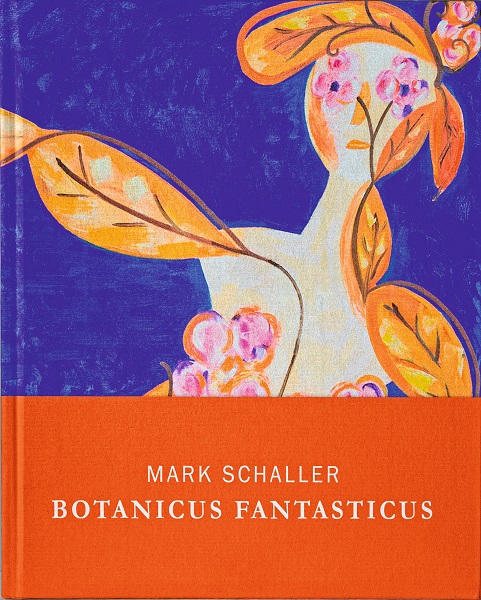
Botanicus Fantasticus conflates the known and the unknown; coined from the Latin term for Botanical Garden (Hortus Botanicus) and Stylus Fantasticus, a style of baroque music ‘known for its elaborate ornamental tonalities that could not be clearly defined’. Published in conjunction with an exhibition of the same name held at Fox Galleries, Melbourne, ‘Botanicus Fantasticus’ is the first in a four-part series of books published by the gallery; an initiative borne from the impact of the COVID-19 pandemic as a means to champion exhibitions in a time of social distancing.
.
Presenting a new body of works from Mark Schaller, the richly illustrated publication is laden with the artist’s eye-catching oil works, squiggled works on paper and gaudy sculptures, reproduced onto glossy pages. This recent series was developed en plein air in Melbourne’s Royal Botanical Gardens, revealing a collaborative effort of the artist’s observations and co-existence with nature in an urban environment. As Dr Helen Hughes describes in her forward, the works are ‘imbued with a performative and importantly, more-than-strictly-optical sensibility… Tendrils, squiggles, striped lines, dots, globules and globulets. The cacophony of hues, tonalities and the playfulness in his large neo-expressionist work emphasises communication between plant synchronicity and human presence and absence.’
A well-researched essay by Fox Galleries’ Rebecca Agnew offers insights into Schaller’s multifaceted practice, such as his role with the artist collective ROAR, which has shaped him and his oeuvre. Agnew explains, that although Schaller likes the performative role analogous with en plein air painting, it is in this facet of his practice that he reveals an understanding of diverse relationships between the universe and nature. In so doing, Schaller’s enlivens a dialogue of the necessity for humans to coexist with nature, responding to the adverse affects of climate change.
Agnew asks, ‘can you really get lost in the gardens in the same way as an artist of the 19th-century enlightenment set forth into nature to experience the sublime?’ Revealing Schaller’s combined use of his personal guise and his role as an artist, physically in the natural environment, to unravel the collective shift in the relationship within an urban setting and how this affects human and non-human interactions. ‘Setting up his easel with large impractical artworks that flail in inconveniences as he works to ‘be’ in nature to capture his no longer subject as a backdrop, but plants appear to be in the conversation.’


