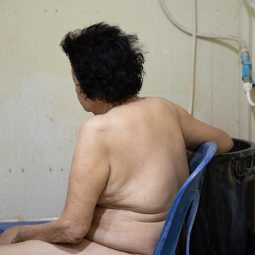
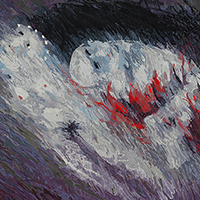
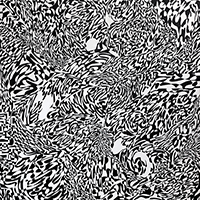
Do women take photographs differently to men? The answer has to be both yes and no. Looking at this huge exhibition of over 300 photographs, prints, postcards, photobooks and magazines from the NGV Collection dealing with women photographers from 1900 to 1975, time and time again, I said to myself, a man would not, or could not, have taken this photograph.
For example, Ponch Hawkes’ intimate images of the lesbian scene in inner-city Melbourne of the 1970s, including No title (Summer night in the backyard at Falconer Street), c.1975, or Dorothea Lange’s empathetic photographs of women suffering amongst working class poor during the Great Depression, such as Migrant Mother, Nipomo, California, 1936, are demonstratively photographs by women of women. Dora Maar penetrated Picasso’s defences in her candid studies of her lover, while Lee Miller absorbed the genius of Man Ray and went on to create photographs that her colleague and mentor could never have imagined.
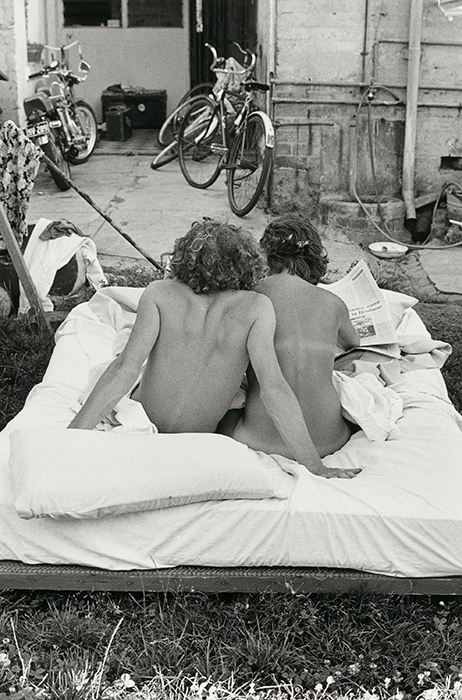
Ponch Hawkes, No title (Summer night in the backyard at Falconer Street), c.1975,
printed 2018, gelatin silver photograph, 30.3 × 20.3cm (image) 38.3 × 27.9cm (sheet)
Purchased NGV Foundation, 2018
© Ponch Hawkes
Courtesy the artist and NGV International, Melbourne
The seven-and-a-half decades that these photographs chronologically traverse demonstrate how women photographers participated in similar developments as their male counterparts but possibly to less acclaim and locked out of some of the networks. In this sense, this exhibition restores the names of some of the women photographers to the ranks of fashion photographers, photojournalists, portraiture photographers and avant-garde experimental photographers.
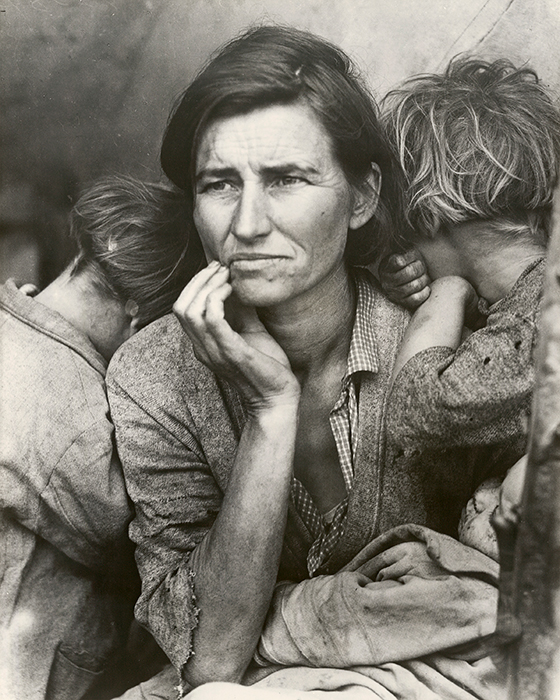
Dorothea Lange, Migrant Mother, Nipomo, California, 1936, printed c.1975, gelatin silver photograph, 49.4 × 39.6 cm (image) 50.6 × 40.7 cm (sheet)
Purchased, 1975
Courtesy NGV International, Melbourne
Then there were the unusual mavericks. Barbara Morgan’s photograph of Martha Graham: Letter to the world, 1940, grew out of a many-decade involvement between the photographer and the dancer. The photograph is of the dancer performing a single kicking sequence as part of her 1940 performance based on the love life of the poet Emily Dickinson. There is this single explosion of energy that may symbolise the transcendence of spirit over the poet’s personal tragedy. Graham’s rigid arms contrast with the rhythm and energy of her seemingly effortlessly flowing dress. The photograph has caught the triumph of spirit over adversity from an intimate and feminine perspective. There is a catalogue of such maverick photographers included in this exhibition, whose work has become iconic, including Berenice Abbott, Imogen Cunningham, Diane Arbus, Ilse Bing, Tina Modotti, Lucia Moholy, Francesca Woodman, and Yamazawa Eiko.
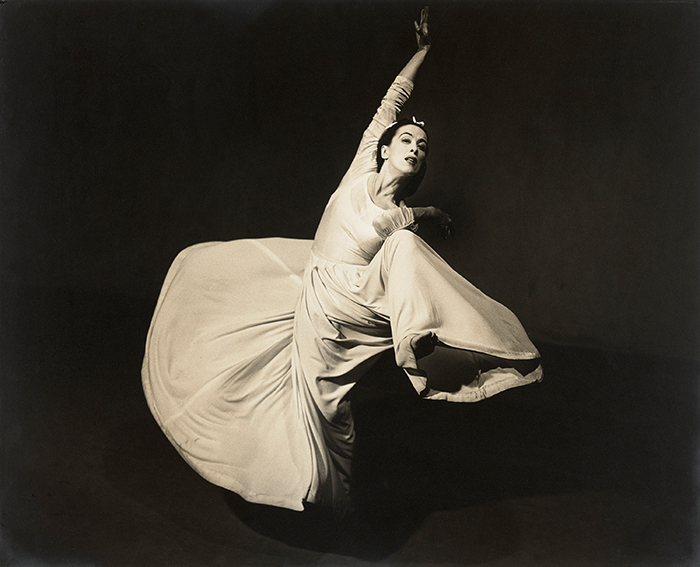
Barbara Morgan, Martha Graham: Letter to the world, 1940, gelatin silver photograph, 48.3 × 39.4cm
Bowness Family Fund for Photography, 2024
© The Estate of Barbara Morgan
Courtesy NGV International, Melbourne
The curator of this exhibition, Maggie Finch, has focused on the work of about seventy women photographers who worked from early suffragette years to 1975, the year proclaimed by the United Nations General Assembly as the International Women’s Year. In other words, from the first wave of feminism to the second wave that in Australia was characterised by such photographers as Carol Jerrems, Fiona Hall, and Sue Ford.
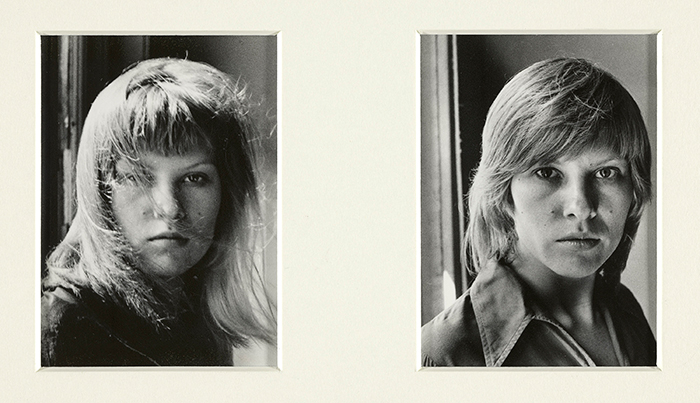
Sue Ford, Annette, 1962; Annette, 1974, 1962–74, printed 1974 from the ‘Time’ series 1962–74, gelatin silver photograph, 11.1 × 20.1cm
Purchased with the assistance of the Visual Arts Board and the KODAK (Australasia) Pty Ltd Fund, 1974
© Sue Ford Archive
Courtesy NGV International, Melbourne
Finch, who is also the author of an excellent essay in the exhibition’s catalogue, has sought an international perspective through the inclusion of American, Japanese and some Western European photographers. However, the poor representation of Russian avant-garde women photographers from the period, for example the lack of Valentina Kulagina and Elizaveta and Olga Ignatovich, as well as of Eastern European photographers, leads to a somewhat incomplete picture. There was a vibrant feminist photography movement occurring east of the Bauhaus.
Women Photographers is a refreshing exhibition that helps to complete our picture of twentieth-century photography.
Emeritus Professor Sasha Grishin AM, FAHA works nationally and internationally as an art historian, art critic and curator.
NGV International
28 November 2025 to 3 May 2026
Melbourne
Originally published in print – Art Almanac, February 2026 issue, pp. 24–27